
Wrapped in Love: Nonna’s Crêpe-Style Manicotti
Updated: Jan 27
I never asked my grandmother why she made manicotti. I only knew it was hers. She used crêpes instead of pasta tubes, rolled them around a simple cheese filling, nestled them into marinara, then laid a slice of muenster on top because it melted beautifully and stayed mild. They baked for about 30 minutes, just long enough for everything to turn bubbly and cohesive.

Jump to recipe. Jump to featured wine.
For a while now, I have wondered if the crêpes were old world or pure New York, and it is a question I can no longer ask because everyone I could ask has passed. The word manicotti is an Italian American name. In Italy you are more likely to hear cannelloni. But the crêpe technique is absolutely Italian. Crespelle are thin crêpes that get filled, rolled, and baked like pasta, especially in the north and central parts of the country, which makes the wrapper feel like a nod to where she came from.
The muenster is the part that makes me smile because it became her signature and is so practical. Mild fontina was not always easy to find, and when it was, it was never cheap. Muenster melted the way she needed it to, stayed gentle, and let the marinara stay in charge. That is how a real home cook thinks. Use what works, make it delicious, feed people.
Somehow it became one of the dishes she made often. After she passed, and she was no longer around to make us her ravioli, this manicotti became our Christmas Eve dish for many years. It was familiar, dependable, and it held the spirit of her table in a way that felt natural, not forced. Eventually, as our Christmas Eve crowd grew, we shifted to more crowd manageable dishes like lasagne.
I haven't made these in a really long time, but I believe they were a success because my 4 year old grandson actually licked his plate.
Elena's Manicotti
(serves 6 - makes 30 manicotti)
Crêpe Batter:
120 g flour (1 cup), sifted
225 g unsalted butter (1 stick)
2 large eggs
235 ml whole milk (1 cup)
235 ml water (1 cup)
Filling:
680 g whole milk ricotta (1.5 lbs.)
225 g whole milk mozzarella (8 oz.), grated
75 g Parmigiano Reggiano (2.5 oz.), grated
20 g fresh parsley (3 Tbs.), chopped
salt & pepper, q.b.
Other Ingredients:
2 liters marinara sauce (2 quarts)
170 g thinly sliced muenster cheese (6 oz.), or Fontina
Parmigiano Reggiano, grated
Method
Make the crêpe batter:
Sift the flour into a bowl.
Melt all but ½ Tbs. of the butter.
In a separate bowl, whisk the eggs, milk, water, and melted butter until well combined.
Whisk the flour into the wet ingredients until smooth.
Make the crêpes:
Melt the ½ Tbs. butter in a 6" crêpe pan over medium low heat. Swirl to evenly coat the pan.
Once the butter is melted and the pan is hot, pour about 21 to 22 g of batter into the pan, swirling to coat. Stop once the batter no longer spreads.
Do not get discouraged. The first few crêpes will come out terrible. I usually have 4 or 5 that go sideways before the pan behaves.
Do not add more butter to the pan. The butter in the batter helps keep the pan lubricated as you go.
Once the crêpe no longer looks wet on top and the bottom is lightly browned, carefully flip it to brown the other side.
Transfer the cooked crêpe to a towel and repeat with the remaining batter. Stir the batter often so the butter stays evenly mixed.


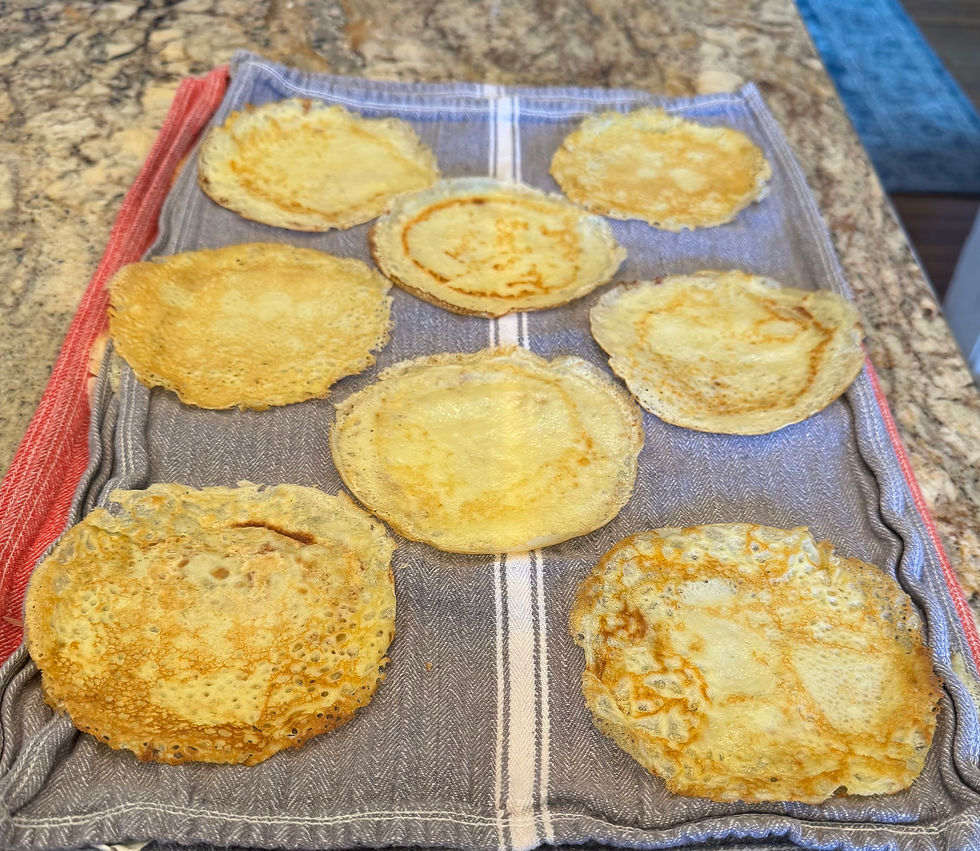
Make the filling:
Combine all filling ingredients except the egg in a bowl and mix well.
Adjust seasoning, then add the egg and mix well to combine.
Put it all Together:
Preheat the oven to 375°.
Spread a thin layer of the marinara in the bottom of a sheet pan.
Spread about 45 to 46 g of filling in a line down the center of each shell.
Roll it up and place seam side down on a tray.

Top each manicotti with half a slice of muenster, or if using grated cheese, sprinkle it over the top.

Top the cheese with sauce and sprinkle with grated Parmigiano Reggiano.
Bake for about 25 to 30 minutes, until bubbly.
The stuffed shells freeze really well. If you plan to freeze them, wrap each one in a piece of wax paper or parchment and freeze on a tray. Once frozen, transfer to a zip top bag.
Featured Wine
Paolo Conterno Barbera d’Asti Bricco is the bottle I want with Nonna’s crêpe style manicotti. The dish is soft, gentle, and saucy, so it needs a red that can cut through baked cheese and marinara without turning heavy or tannic. Barbera does that naturally. It brings bright acidity that keeps the tomato tasting fresh, enough body to hold its own against the oven baked richness, and a clean, juicy red fruit profile that does not fight the delicacy of the crêpes.

Barbera is one of Piedmont’s great food grapes, loved for its naturally high acidity and its ability to stay lively at the table. Two of its most highlyt regarded homes are Barbera d’Alba and Barbera d’Asti, two different DOCs from two different parts of Piedmont. Barbera d’Alba comes from the Langhe area around Alba, closer to the Barolo and Barbaresco hills, and it often reads a little firmer and more structured. Barbera d’Asti comes from the Asti and Monferrato hills, where the style tends to feel more open and lifted, with that bright snap that pairs so naturally with tomato based dishes. For this manicotti, that Asti energy is exactly what I want. It keeps the marinara tasting fresh, and it lets the crêpes and cheese stay soft and comforting instead of turning the pairing heavy.
Paolo Conterno is a historic Langhe estate rooted in Monforte d’Alba, founded in 1886 as Casa della Ginestra. The family has stayed independent through generations, with a long reputation for honest Piedmont wines built for the table, not for show. Even though this bottle is Barbera d’Asti, it carries the producer's same house style, clean, traditional, and food first. Serve it at cellar temperature and it drinks the way this dish eats, bright, comforting, and easy to go back to.
Jump back to recipe.


Comments